
Untangle the rope. Solve it.
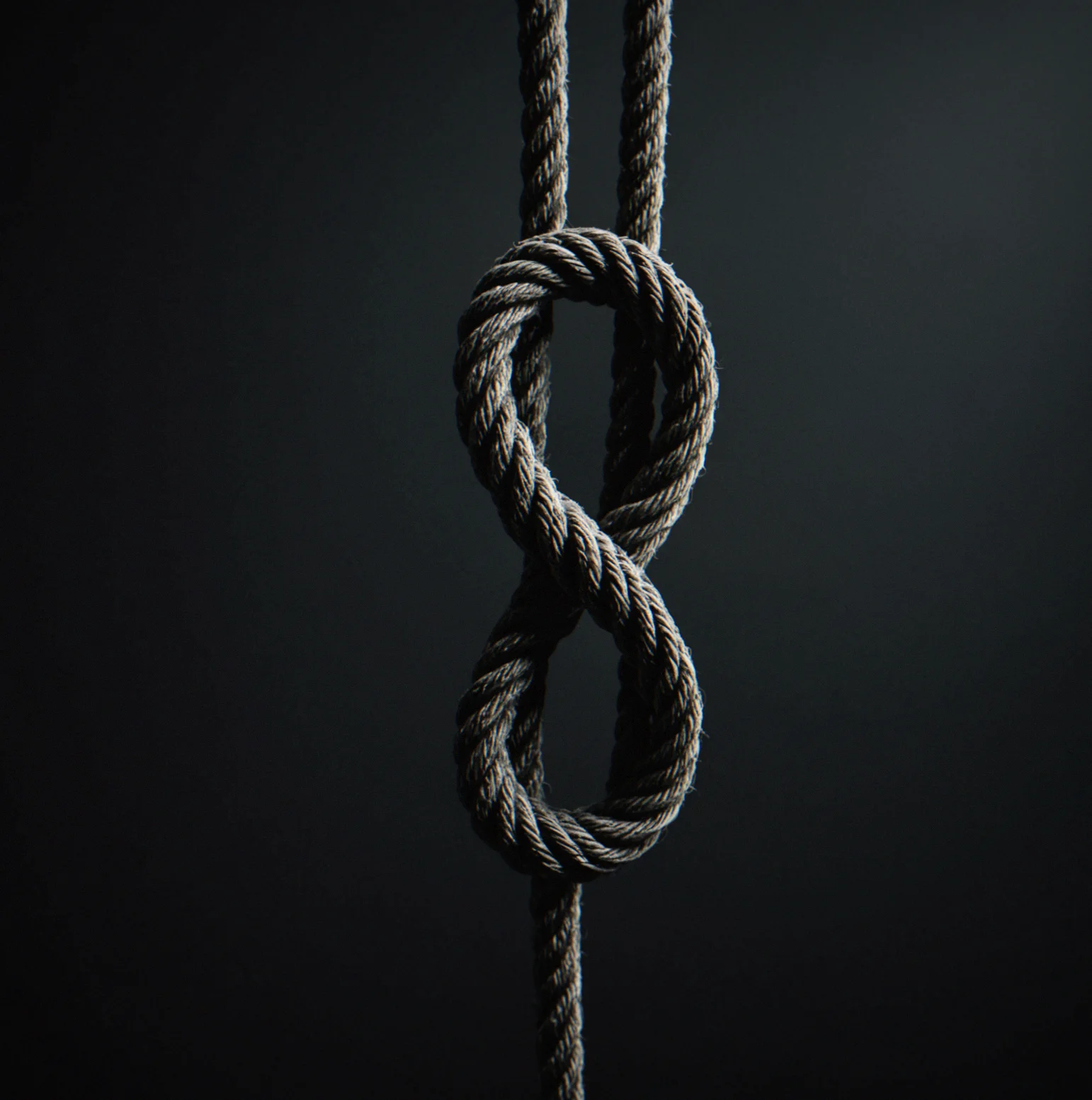
Spatial reasoning games that work around one deceptively simple rule.
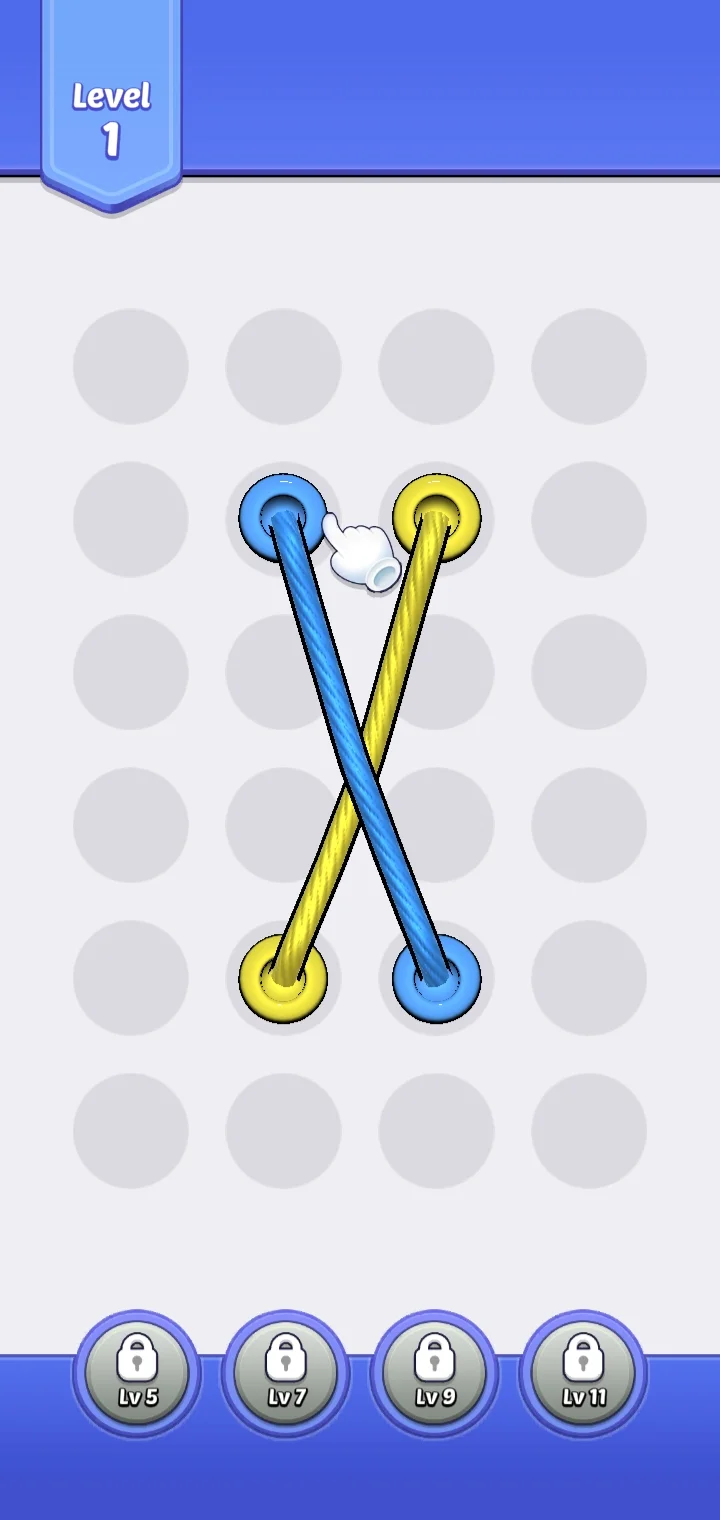
You get twisted rope in 2D or 3D space. Figure out how to move it until every strand flattens out. No tutorials, no story, no filler. It's just you, the constraint, and that moment when everything snaps into place.
The rope does exactly what you tell it to—pull, loop, rotate, trace around angles that seem impossible. Each puzzle naturally leads into the next one through play. By the time you hit puzzle 15, you're planning four moves ahead without even realizing it.
This is for people who beat Portal, played Untangle and wanted something more. People who care about how the game works, not how good it looks. The rope is the whole thing. Just watch it move.
How the mechanics actually work
Constraint as teacher
The rope does one thing: it responds to what you do. There's no Hidden layer underneath. You learh by figuring it out because that's literally the only way to understand it—watching how rope bends, twists and settles when you pull on it.
Session vs. persistent cookies
When you reset, the puzzle state clears out but your mudcle memory stays. Each try teaches your hands what the geometry feels like. By the time you hit puzzle 8, you're not thinking anymore—you're just moving. That's when it stops feeling like a puzzle.
2D thinking in 3D space
Early on, everything's flat. Then the camera starts rotating. A rope you're sure is crossing over something turns out to be layered above it instead. Suddenly the viewpoint becomes part of solving it.
The friction of impedance
Rope doesn't slide through obstacles like it's not there. It catches. And that's not broken—it's actually telling you something. When it snags, that resistance is giving you clues about what you're not seeing yet.

Scaling complexity without tutorials
You get through a dozen puzzles and still no explanation. At 25 you're learning from nothing but trying and failing. The difficulty ramps because you keep stacking constraints on top of each other—more obstacles, tighter spaces, messier knots.
Speed running emerges naturally
There's no timer built in but once you've solved something, you know the sequence of moves. Do it again faster. Show your friends your time. The leaderboard sits there quietly if you care about it.
Why rope instead of blocks
Blocks snap into place. Rope moves continuously. That opens up infinite possibilities in between, which means you're discovering answers instead of just picking from options. Much cleaner.
Spatial reasoning as gameplay
You're not matching anything or hitting rhythms. You're rotating problems in your mind, tracing possible paths, holding several constraints at once. That's basically the whole thing.
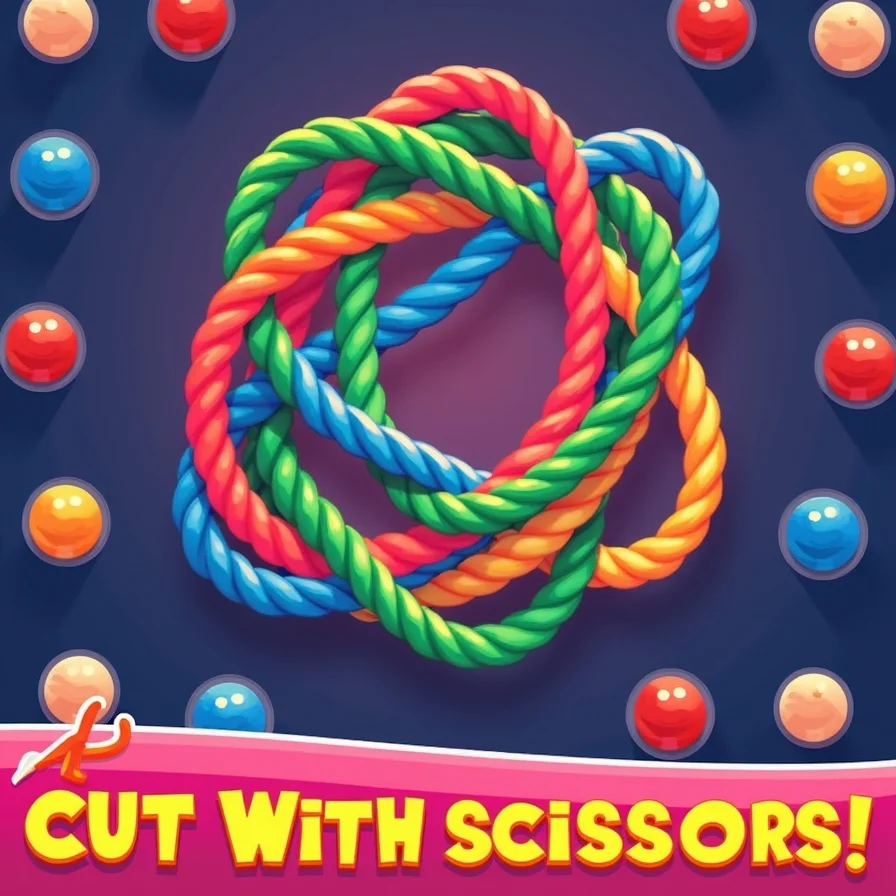
The reset button isn't a failure
You can hit reset whenever you want. Nothing happens to you for it. The timer resets too. That takes away the sting and lets you mess around without worrying, which somehow makes you push harder.
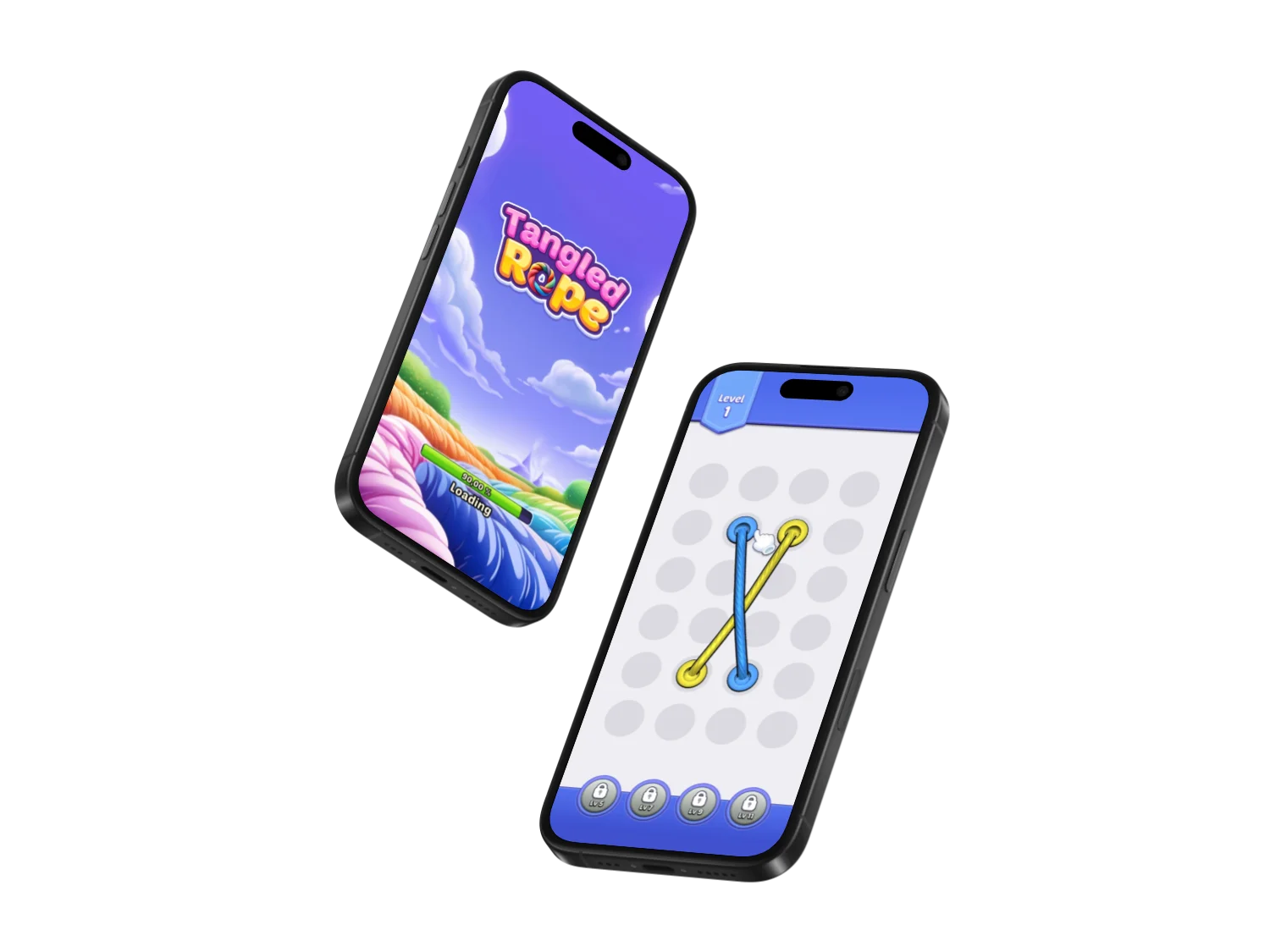
Minimalism as feature
There's no voice acting. No story. No flashy effects. Just rope and the space it lives in. Nothing gets between you and the actual problem. Everything else would just get in the way.
Why rope works as a mechanic
Three things that make the constraint itself become the puzzle.
One mechanic, infinite configurations
Rope isn't like blocks with fixed states. It moves continuously through space, so you end up discovering solutions instead of picking them off a list. Those in-between states as you're pulling? They show you something you didn't expect.
Learning by doing
You don't get a tutorial about rope physics. After a few puzzles your hands already understand how it bends. Fifteen puzzles in, you're tracking four spatial constraints at once without consciously thinking about any of them. That's when the mechanics stop being visible.
Friction tells you something
Rope catching on an obstacle isn't a mistake. It's telling you something about the space you can't see from where you're standing. So you reposition. You try a different angle. You figure it out.
Why rope puzzles work
The rope mechanic is simple by necessity. Players don't need someone explaining how rope bends—they already know from handling it in real life. Pull it and it moves. Loop it and it holds. By the time you hit puzzle 5, you've stopped thinking about the interface entirely. Now you're just working through the geometry. That's the whole idea.
What makes it sing is the constraint. Rope doesn't pass through solid walls. It can't teleport across empty space. Sounds limiting—and it is—but that's exactly where the creativity kicks in. Your only tool is rope in 3D space, so you start seeing solutions that other puzzle types wouldn't even let you try. People who've played Portal or spent time with Untangle games get this right away. You're not solving around the limitation. The limitation is the entire puzzle.
The difficulty ramp is what keeps it from feeling broken. Early on, you're learning through playing. Middle sections bring in rotation and stacking in multiple dimensions. Further in, you're juggling four or five constraints at once and moving with real precision. But the rope itself never changes. It always behaves the same way. Players just get sharper at reading the space around them. By puzzle 30, you're not fighting the controls or trying to understand the system anymore. You're purely up against the geometry.
Why this mechanic actually works
Rope puzzles stick around because they're built on real constraints, not shortcuts.
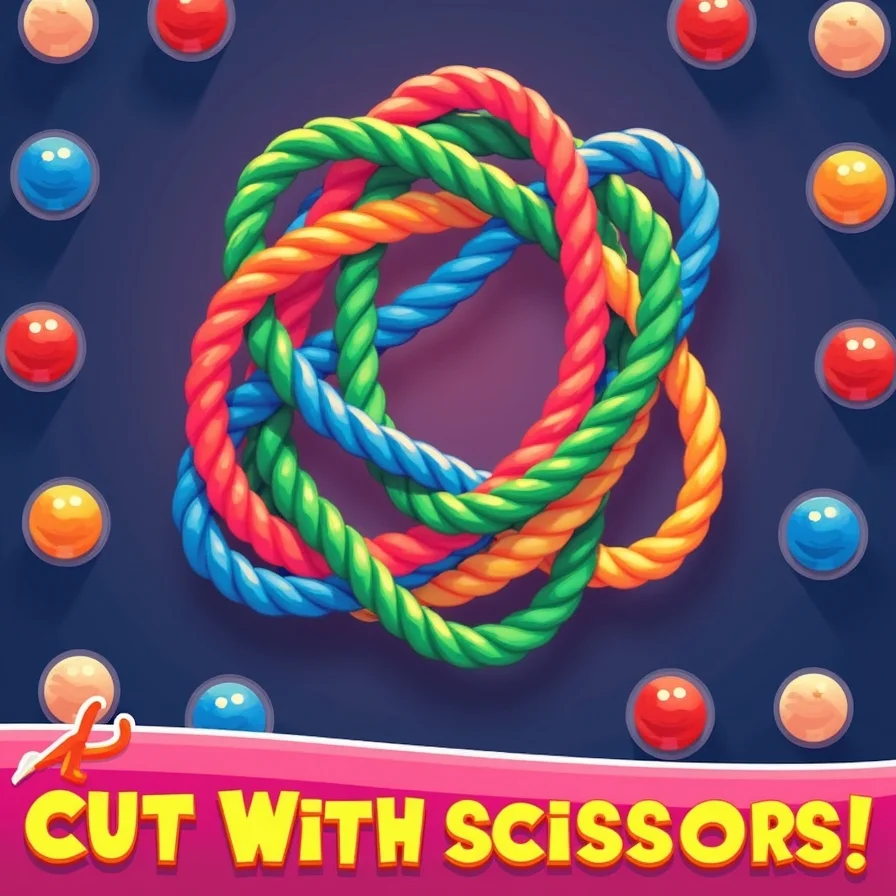
What you see is what happens
Pull the rope, it moves. Loop it, it stays put. No hidden numbers underneath. No invisible collision boxes springing up in puzzle 20. Everything behaves exactly like it looks.
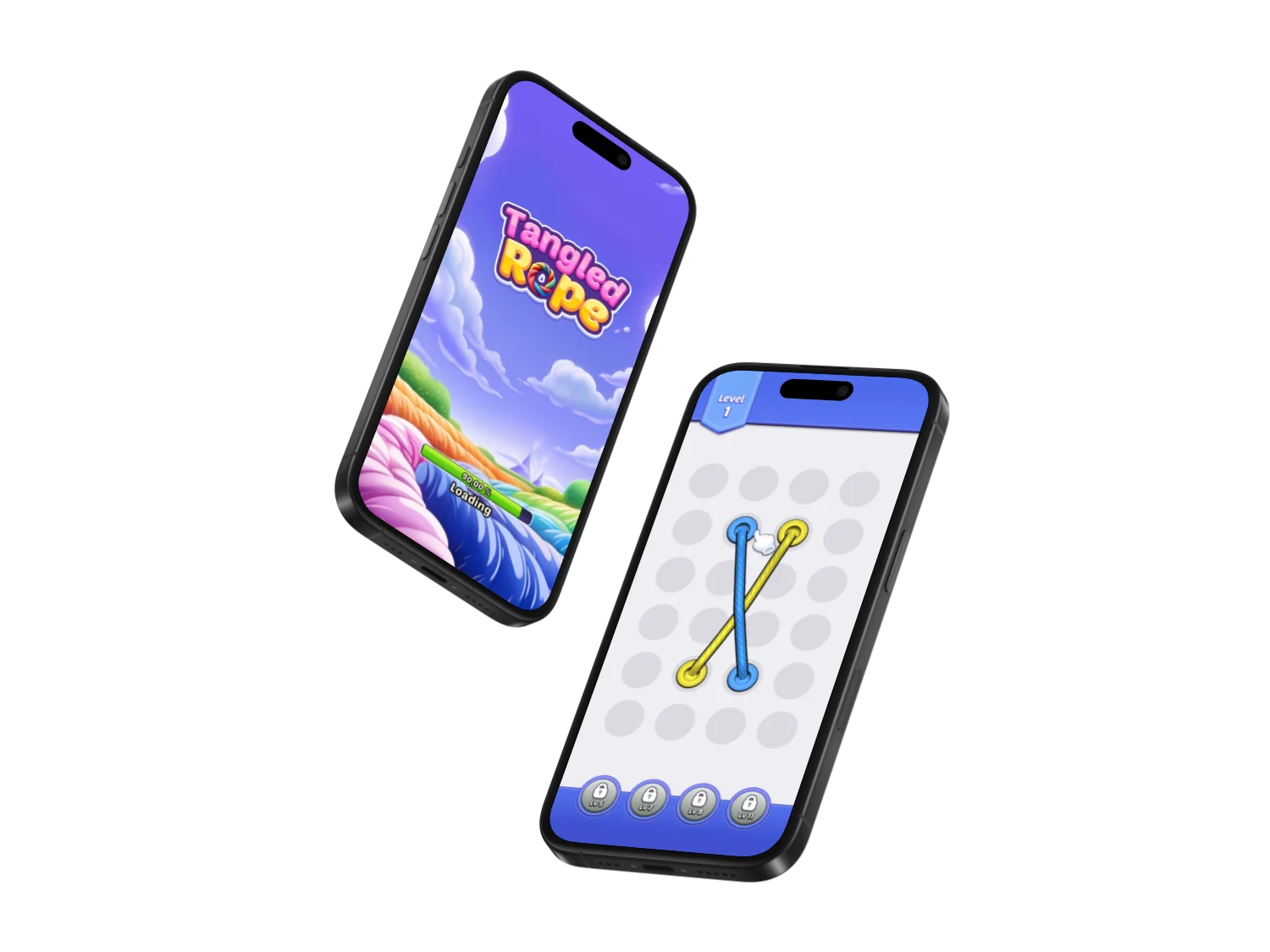
You learn by doing it
Three puzzles in, you've figured out rope physics without any tutorial text. A dozen in, you're thinking in 3D space without thinking about the controls. The design teaches itself.
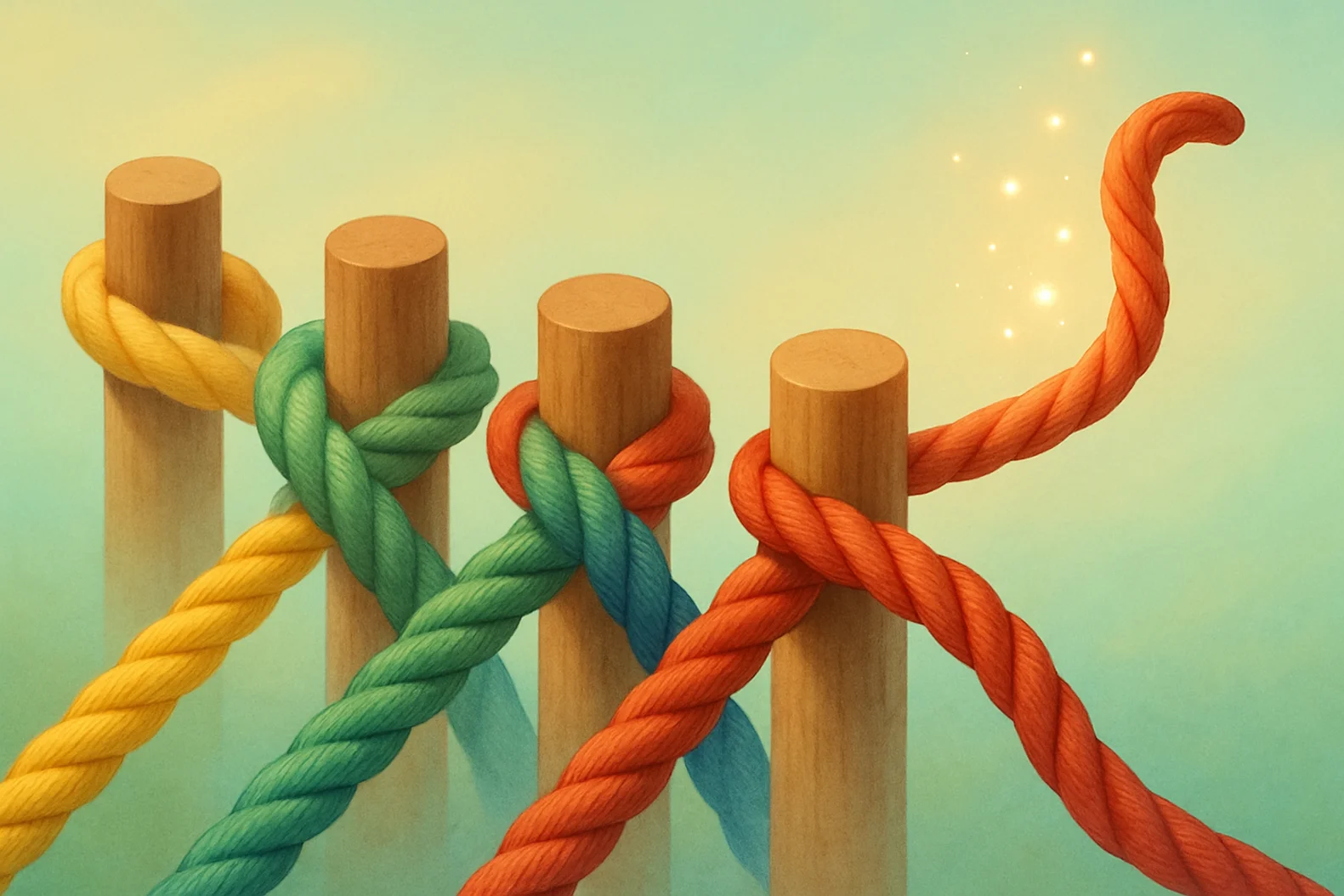
Limits make the puzzle work
Rope can't phase through walls. Can't jump across gaps. Sounds like a problem, but it's actually what makes you see the space differently. The restriction is where the discovery happens.
It gets harder without breaking
Early ones teach you to think spatially. Middle ones throw rotation at you. Later puzzles stack multiple constraints together. But the rope always works the same. Players just get sharper at reading space and depth.
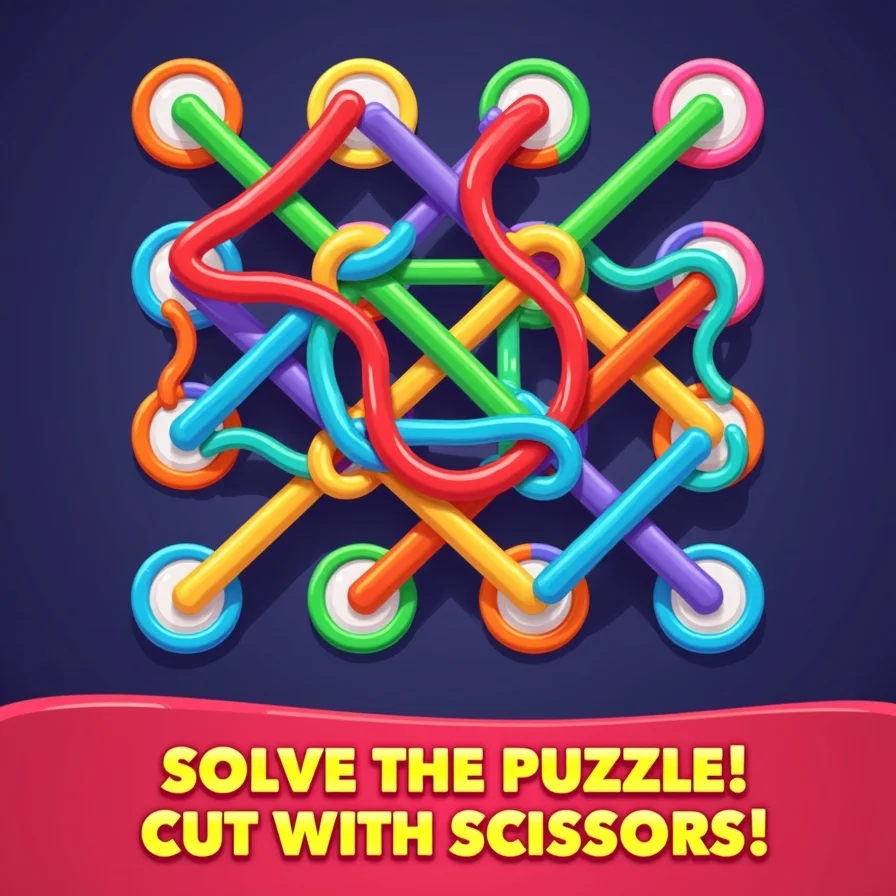
Smooth movement, not menu clicking
It's not about picking from a list. The rope flows continuously. Each millimeter shifts the solution. You're not navigating options—you're moving geometry directly in space.
Design principles
How constraint systems actually work
Rope-based puzzles come down to one thing: you can move things around, but only within what physics allows. Pull the rope and it goes where it goes. Rotate your view and suddenly you see parts of the puzzle you couldn't before. No branching paths in dialogue, no mechanics that only show up late to blindside you. Just a system that responds the same way every time. Which sounds restrictive, except it's actually what makes the whole thing work.
The hard part doesn't come from the rules changing on you. It comes from how the space itself gets more complex. The first few puzzles teach you to think flat. Then you're dealing with rotation and layers stacked on top of each other, and now you've got to keep multiple constraints straight in your head at once. Get to around puzzle 25 and you're not fighting the controls or trying to figure out what you're supposed to do. You're fighting the geometry. That's the kind of difficulty that actually means something. No filler, no tricks.
What you get
No tutorials. Just rope.
By puzzle 3 you've got it. The mechanic teaches itself—pull, loop, rotate, solve. No explanations for things that are obvious. No story bloat. Just you figuring out how to work within the constraint.
40+ puzzles with one mechanic
The rope system stays the same the whole way through. Early ones build your spatial thinking in 2D, middle ones add rotation and depth, later ones force you to juggle multiple constraints at once and think before you move. Harder puzzles mean more complexity, not new rules showing up halfway through.
Friction reveals geometry
Rope doesn't slip through walls. It catches, wraps, reacts to what's actually there. That friction isn't getting in your way—it's telling you something. The constraint is part of the solution.
Speed runs emerge naturally
Solve it once, you know the sequence. Run it faster next time. The leaderboard is there if you care about it. But the real feeling is your hands doing the solution without thinking—that's when the design stops getting in the way.
Questions
Common concerns
Real questions from real players. Skip the marketing—here's what actually matters.
Not really. Untangle lives in 2D. This one uses the full 3D space and rotation is baked into how you solve things—you're working through geometry across multiple dimensions at once. By the time you hit puzzle 12, you're juggling depth, layering, and perspective in a way Untangle never touches.
You're looking at 40 or more puzzles before things flatten out, and the way it scales is clean because constraints pile on top of each other rather than introducing entirely new rules. Early puzzles teach you to think in 2D. The middle section adds rotation. Later on you're holding four or five spatial constraints in your head simultaneously. By puzzle 35, your brain is operating in a completely different mode than it was at puzzle 5.
Nope. After puzzle 3 or so, you've already figured out how the rope responds to what you're doing. There's no buried UI, no numbers underneath tracking stats—just rope that moves the way it should. That's kind of the whole thing.
Reset whenever. Nothing's held against you. The timer resets with it too, which is the key part. Removing that penalty means you can mess around freely and it's weird but true—people actually push harder when they're not afraid to fail.
Reset and go again. Every attempt teaches your body something different about how the rope moves. By your fourth or fifth try, you usually see it because your hands have memorized the geometry under those constraints. Learning happens in the background whether you notice it or not.
The leaderboard's there if you want it, and speedrunning shows up naturally once you know a solution. You've got the move sequence down, so you can do it faster next time. Share your time if that appeals to you, but the real payoff is when your hands just execute the answer without your brain being in the way—that's when the design stops existing.
New puzzles and design breakdowns land every other week.
Curious why certain constraints actually work? How rope physics change the difficulty curve? You'll get puzzle releases, mechanic breakdowns, and the occasional note that minimalism isn't cutting corners—it's being precise. No junk. Just rope.
No junk. Just rope.